
Bridget Riley
Born: April 24, 1931
She lived in Norwood, London, and studied at the Royal College of Art.
"Riley began painting figure subjects in a semi-impressionist manner, then changed to pointillism around 1958, mainly producing landscapes. In 1960 she evolved a style in which she explored the dynamic potentialities of optical phenomena. These so-called 'Op-art' pieces... produce a disorienting physical effect on the eye."
Inspired by the Italian Futurists (who used neoimpressionism and cubism to express the energy of life), she began to go into dynamic black-and-white paintings.
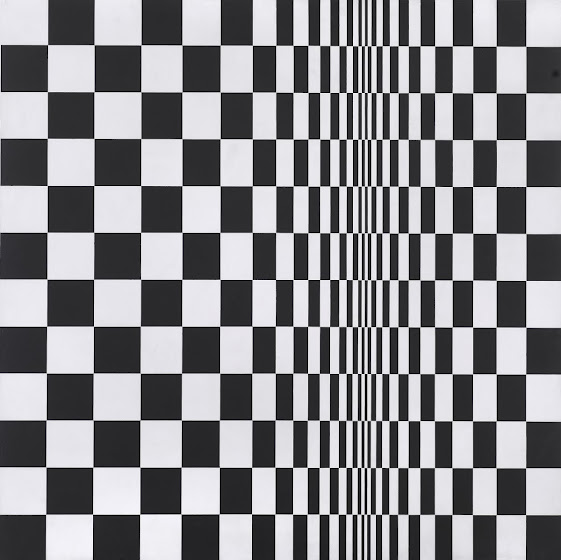
Movement in Squares, 1961, emulsion on board.
Later, she would explore more color to provide the same effect.
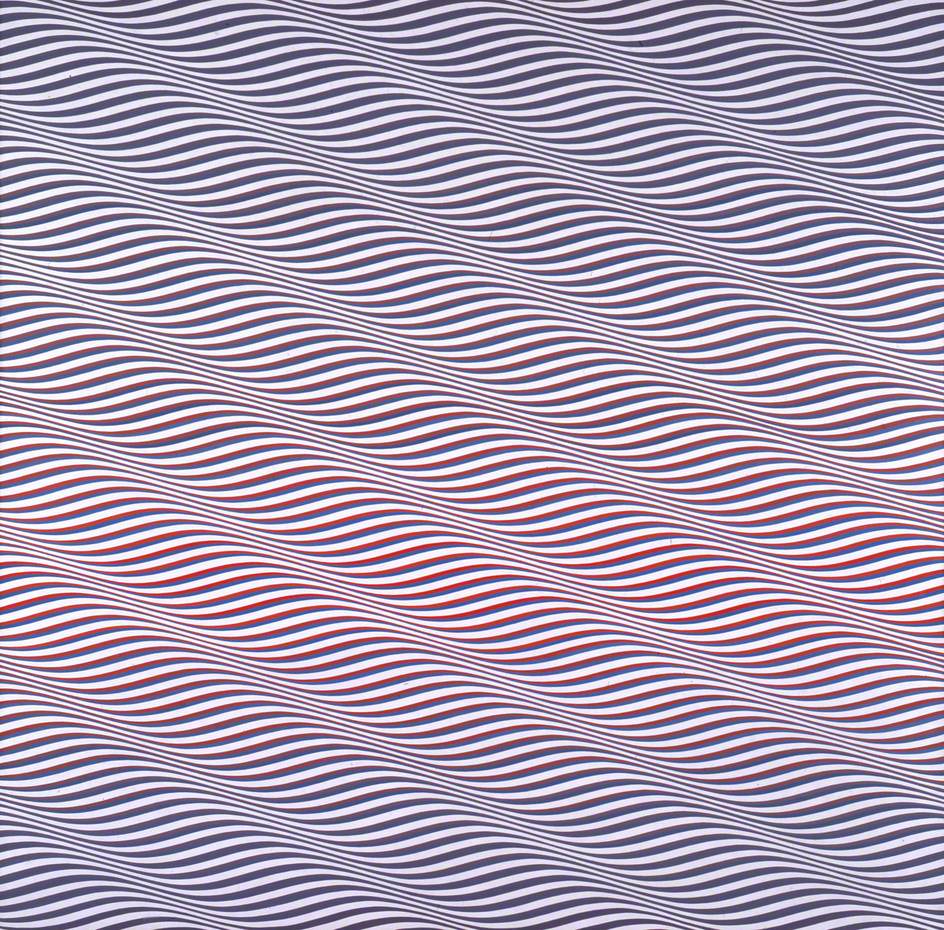
Cataract 3, 1931, emulsion and PVA on board
This captured the public's attention- her work was used to advertise and commercialized in fashion, to her annoyance.

Conversation, 1931, emulsion and PVA on board.
Riley has said of her art, "the word 'paradox' has always had a kind of magic for me, and I think my pictures have a paradoxical quality, a paradox of chaos and order in one."
http://www.art-quotes.com/auth_search.php?authid=3885#.YEo__y2cZQI
https://www.tate.org.uk/art/artists/bridget-riley-1845


I love your artist's artwork and how it is sorting of confusing to the eye at first.
ReplyDeleteI love the patterns of her artwork. You gave a really good analysis of her work too!
ReplyDelete